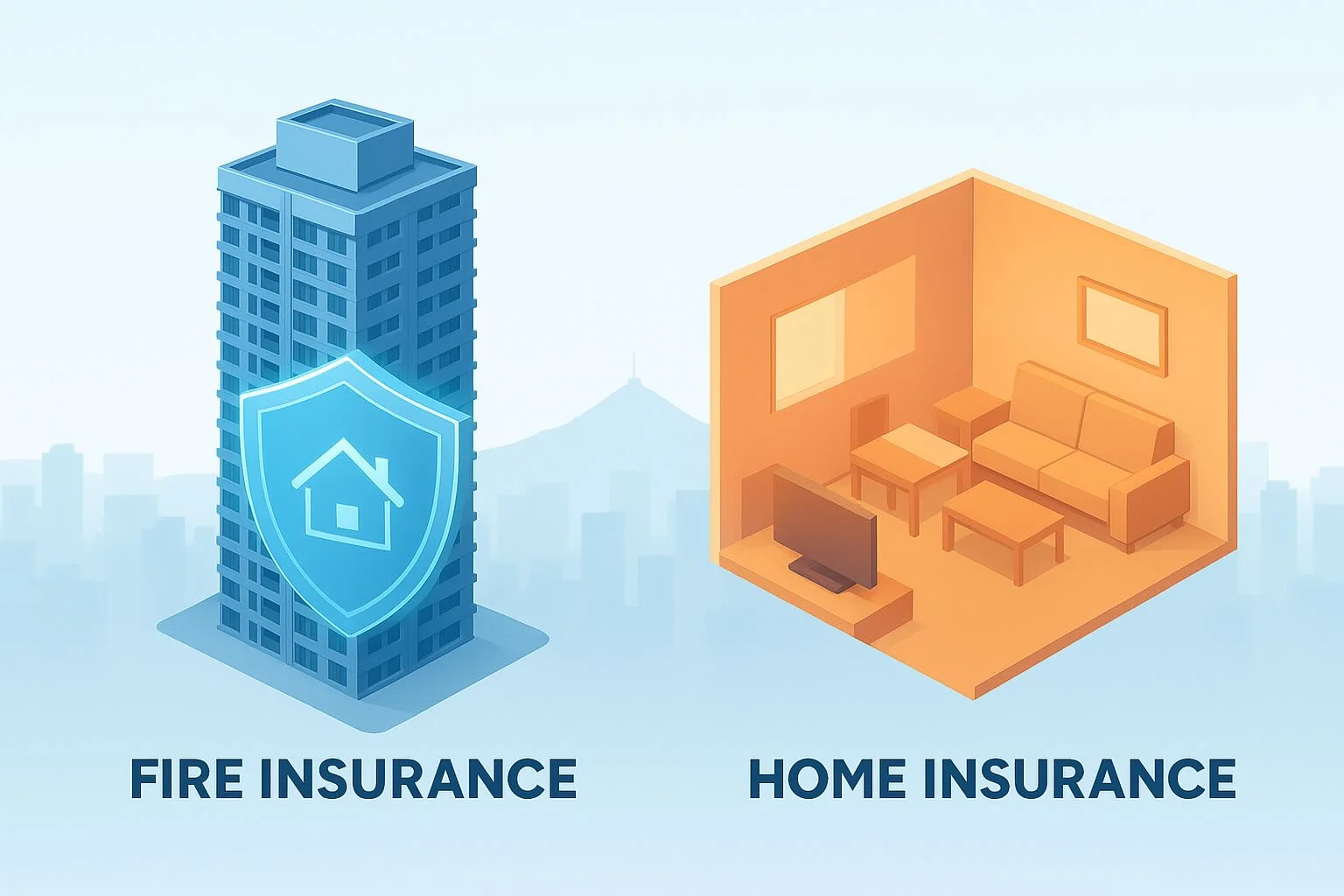
People often talk about "fire insurance", but in the UK fire cover is really part of buildings insurance, and it is frequently confused with contents insurance. Knowing the difference, and who is responsible for arranging it, matters whether you own, let or rent a home or business premises. Here is a clear guide for England and Wales.
"Fire insurance" usually means buildings insurance
There is no separate compulsory "fire policy" for most people. Instead, cover against fire (along with floods, storms, subsidence, escape of water and similar perils) is provided by buildings insurance, which covers the structure of the property, walls, roof, floors, and usually permanent fixtures like fitted kitchens and bathrooms.
By contrast, contents insurance covers the moveable belongings inside, furniture, electronics, clothing and personal possessions. Fire can destroy both the building and its contents, which is why many people hold both.
Is buildings (fire) insurance legally required?
There is no general legal duty on a homeowner to insure their own home against fire. However, in practice it is effectively required in several situations:
- Mortgages: lenders almost always require buildings insurance as a condition of the loan, to protect their security. Most homeowners with a mortgage must have it.
- Leases: residential and commercial leases typically require the building to be insured (often by the landlord/freeholder, with the cost recovered through the service charge or rent).
- Commercial premises: a business's lease or lender will usually require buildings cover, and businesses commonly add contents, stock and business interruption cover.
So while not a statutory obligation, buildings insurance is usually a contractual one.
Who is responsible for arranging it?
This depends on the type of property and the arrangement:
- Freehold house (owner-occupier): the owner arranges buildings insurance (and the lender requires it if mortgaged).
- Leasehold flat: typically the landlord/freeholder (or management company) insures the whole building, and leaseholders contribute through the service charge. Leaseholders insure their own contents.
- Rented home (tenant): the landlord insures the building; the tenant is responsible for insuring their own contents (the landlord's policy will not cover the tenant's belongings).
- Commercial let: usually the landlord insures the building and recovers the premium from the tenant; the tenant insures its own contents, stock and liabilities.
Always check the lease or tenancy agreement to see who must insure, to what level, and who pays.
Key facts and practical points
- Sum insured / rebuild cost. Buildings insurance should reflect the rebuild cost (not the market value), to avoid being underinsured, which can reduce a claim.
- Read the perils and exclusions. Check exactly what is covered and any conditions (e.g. unoccupied-property clauses, fire-safety requirements).
- Fire safety duties. Separate from insurance, owners and occupiers may have fire-safety obligations (for example under fire-safety regulations for certain buildings and workplaces), non-compliance can also affect a claim.
- Tenants: do not assume the landlord's policy covers your possessions, it does not. Get contents cover.
- Leaseholders: you usually cannot choose the buildings insurer (the landlord does), but you can ask for a copy of the policy and challenge unreasonable service-charge premiums.
Key takeaways
- "Fire insurance" is usually part of buildings insurance (the structure); contents insurance covers belongings, many people need both.
- It is not generally a legal requirement, but mortgage lenders and leases almost always require buildings cover.
- Responsibility depends on the property: owners insure their own homes; for flats and lets the landlord/freeholder usually insures the building while occupiers insure contents.
- Insure for the rebuild cost, check exclusions, and remember separate fire-safety duties.
Sources
- General insurance principles in England & Wales (buildings vs contents cover; insurable interest; rebuild cost)
- Mortgage and lease requirements to insure (contractual obligations)
- Fire-safety obligations for certain premises (separate from insurance)
--- This article is general information about the law of England & Wales as at 2026, not legal or financial advice. For advice on your circumstances, consult a qualified solicitor or insurance professional.