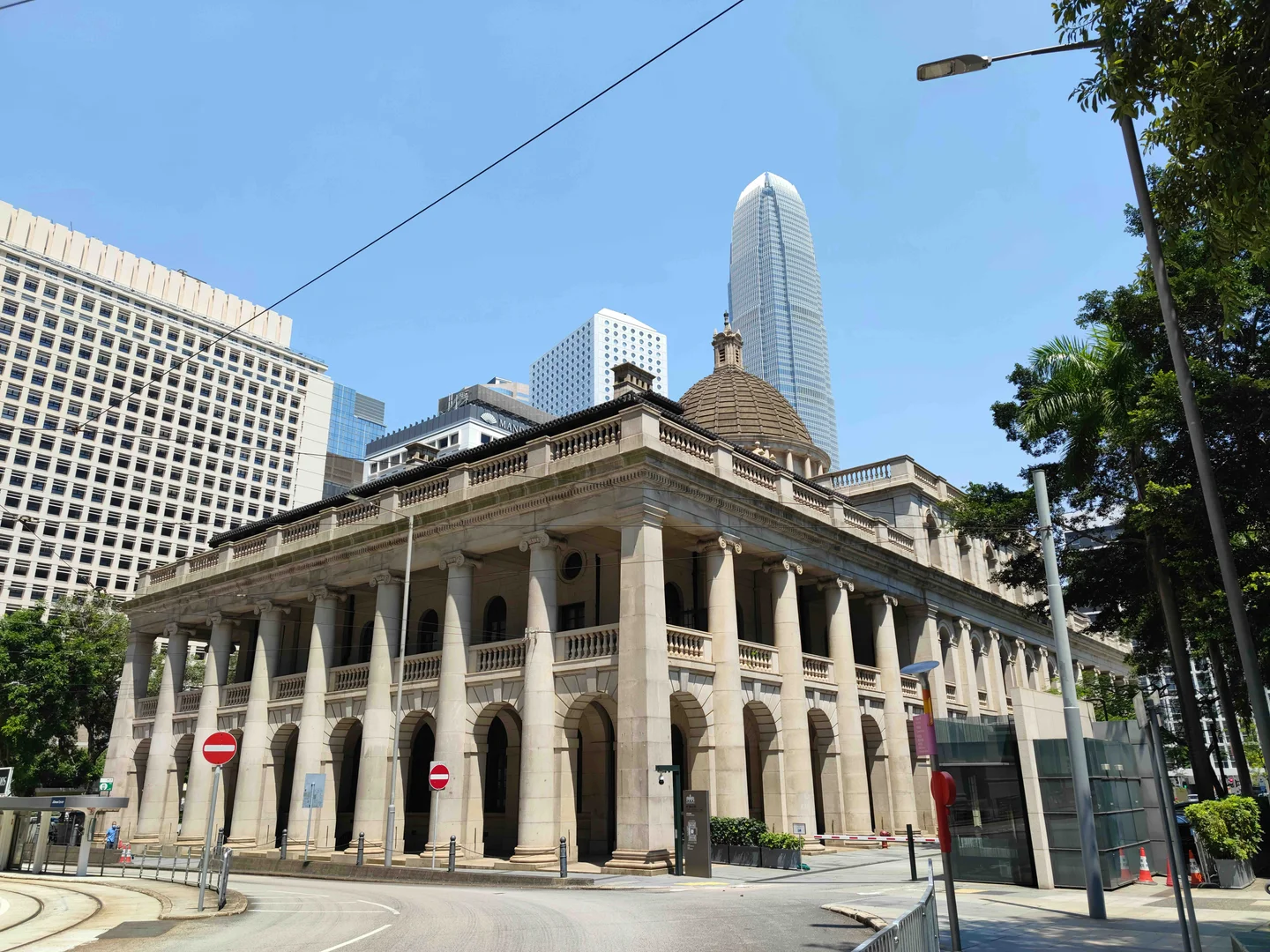
Hong Kong is a Special Administrative Region of China, operating under a legal system based on the rule of law and an independent judiciary. Below, we explore what it means for Hong Kong to be a Special Administrative Region in terms of its legal system.
Hong Kong, the Special Administrative Region of the People’s Republic of China
A Brief History
A Collection of Small, Nameless Islands (Before 1841)
Before 1841, Hong Kong was a collection of small islands in Canton (Guangdong) Province, inhabited by a few thousand fishermen, farmers, and stonecutters. It was governed by the Qing dynasty under the Great Qing Legal Code.
British Hong Kong (1841 – 1997)
During the First Opium War (1839–1842), the British used these islands as a naval outpost. In 1841, modern Hong Kong was founded by the British. The Treaty of Nanking (1842) ceded Hong Kong to the British Crown, establishing it as a Crown Colony. English common law became the foundation of its constitution, with English laws applied except where inapplicable to local circumstances or modified by local legislation.
Hong Kong, the Special Administrative Region of the People’s Republic of China (1997 – Present)
The Sino-British Joint Declaration (1984) stipulated that Hong Kong would return to Chinese sovereignty on 1 July 1997 as the Hong Kong Special Administrative Region (HKSAR). Post-handover, most institutions and laws from British Hong Kong remain largely unchanged. Under the “one country, two systems” framework, Hong Kong maintains a common law system, distinct from Mainland China’s civil law system.
A Common Law Jurisdiction
Since British colonization in 1841, Hong Kong has followed the common law system, one of the two major legal systems globally, alongside jurisdictions like England and Wales, Canada (except Québec), Australia, New Zealand, South Africa, and the United States (except Louisiana). The hallmark of Hong Kong’s common law system is its reliance on the doctrine of precedent as a primary source of law.
Sources of Law
Case Law
Case law consists of unwritten laws derived from court decisions.
Common-Law Rules
Common-law rules stem from reason and custom, shaped by judicial decisions in cases with similar facts. The doctrine of precedent requires judges to follow prior decisions, with higher court rulings binding lower courts. Hong Kong courts may also refer to precedents from other common law jurisdictions.
Rules of Equity
Rules of Equity, rooted in fairness and the King’s conscience via the Lord Chancellor, supplement common law where it is too rigid. These discretionary rules allow judges to decide their application, such as granting remedies like:
- Injunction (ordering a party to stop an action)
- Specific performance (ordering a party to fulfill a contract)
Per the High Court Ordinance (Cap. 4), Rules of Equity prevail over common-law rules in case of conflict.
Legislation
Legislation consists of written laws in Hong Kong.
Basic Law
The Basic Law, enacted per the PRC Constitution, serves as the HKSAR’s constitutional document. It ensures continuity of systems post-handover, including social, economic, and judicial systems, under the “one country, two systems” principle. It covers:
- External affairs
- Public security
- Civil rights
- Political structures
- Public finance
- Monetary affairs
- Trade, industry, and commerce
- Education
- Science, culture, and sports
- Religion, labor, and social services
The Basic Law is guaranteed for at least 50 years from 1997, with no set expiry.
Standing Committee of the National People’s Congress’s Interpretations of the Basic Law
The Standing Committee of the National People’s Congress (NPCSC) interprets Basic Law provisions related to Central People’s Government affairs or HKSAR-Central relations. These interpretations are binding on HKSAR courts.
Domesticated Annex III National Laws
Mainland China’s national laws generally do not apply in Hong Kong, except those listed in Annex III to the Basic Law, covering defense, foreign affairs, and matters outside HKSAR autonomy, such as:
- Resolution on the Capital, Calendar, National Anthem, and National Flag of the PRC
- Resolution on the National Day of the PRC
- Order on the National Emblem of the PRC
- Declaration on the Territorial Sea
- Nationality Law of the PRC
- Regulations on Diplomatic Privileges and Immunities
The Law of the PRC on Safeguarding National Security in the HKSAR was added to Annex III on 30 June 2020 to prevent subversion, terrorism, separatism, and collusion with foreign forces.
These laws are implemented via:
- Promulgation: Applied without amendment, e.g., PRC Law on the Exclusive Economic Zone and the Continental Shelf.
- Local legislation: Implemented with modifications, e.g., National Flag and the National Emblem Ordinance (Instrument A401).
Ordinances (i.e., Primary Legislation)
Ordinances are codified laws enacted by the Legislative Council, equivalent to “Acts” in other jurisdictions. They override older ordinances, subsidiary legislation, case law, and Chinese customary law, but are superseded by the Basic Law. Examples include:
- Declaring legal rules: Legislative Council (Powers and Privileges) Ordinance (Cap. 382)
- Consolidating ordinances: Crimes Ordinance (Cap. 200)
- Codifying case law: Sale of Goods Ordinance (Cap. 26)
- Sanctioning values: Dogs and Cats Ordinance (Cap. 167)
- Collecting revenue: Inland Revenue Ordinance (Cap. 112)
- Introducing policies: Air Pollution Ordinance (Cap. 311), Competition Ordinance (Cap. 619)
- Promoting dispute resolution: Apology Ordinance (Cap. 631)
- Promoting social change: Sex Discrimination Ordinance (Cap. 480), Family Status Discrimination Ordinance (Cap. 527), Disability Discrimination Ordinance (Cap. 487)
- Implementing treaties: Child Abduction and Custody Ordinance (Cap. 512) (enacting the Hague Convention)
- Implementing Annex III laws: Shenzhen Bay Port Hong Kong Port Area Ordinance (Cap. 591)
- Implementing PRC-HKSAR agreements: Mainland Judgments (Reciprocal Enforcement) Ordinance (Cap. 597)
Subsidiary/Subordinate Legislation (i.e., Secondary Legislation)
Subsidiary legislation includes proclamations, rules, regulations, or by-laws made under an Ordinance, equivalent to statutory instruments in the UK. They execute existing ordinances, e.g., The Rules of the High Court (Cap. 4A) under the High Court Ordinance (Cap. 4). Makers include:
- HKSAR Government: Empowered by the Basic Law
- Courts: E.g., The Rules of the High Court (Cap. 4A)
- Regulatory authorities: E.g., Securities and Futures (Unsolicited Calls—Exclusion) Rules (Cap. 571A) under the Securities and Futures Ordinance (Cap. 571)
- Private companies: E.g., Peak Tramway By-laws (Cap. 265B) under the Peak Tramway Ordinance (Cap. 265)
- Public corporations: E.g., Mass Transit Railway By-laws (Cap. 556B) under the Mass Transit Railway Ordinance (Cap. 556)
- Professional bodies: E.g., Professional Accountants By-laws (Cap. 50A) under the Professional Accountants Ordinance (Cap. 50)
Customary Law
Traditional Chinese customary law in Hong Kong includes the Qing Code and 1843 customs, with local variations. Per the Basic Law and New Territories Ordinance (Cap. 97), indigenous customs in the New Territories are protected. Customary law is often unwritten, defined by expert witnesses and case law.
Secondary Legal Authorities
Secondary legal authorities, such as scholarly publications, are less authoritative but clarify complex cases. Examples include:
- Classics: Commentaries on the Laws of England (1765) by William Blackstone
- Treatises: Chitty on Contracts by Hugh Beale
- Textbooks: Tort Law in Hong Kong (2012) by R. Glofcheski
- Articles: Hong Kong Law Journal
- Professional journals: Hong Kong Lawyer
- Encyclopedias: Halsbury’s Laws of Hong Kong
- Dictionaries: Hong Kong English-Chinese Legal Dictionary
Enforcement of Law
Hong Kong’s government enforces laws through three branches, each vested with powers by the Basic Law.
The Legislature
The Legislative Council (LegCo) enacts, amends, or repeals laws, approves budgets, raises questions on government work, handles public complaints, endorses judicial appointments, and can impeach the Chief Executive.
The Executive
The HKSAR Government, led by the Chief Executive, formulates policies, conducts administrative and external affairs, introduces budgets and bills, and designates officials to represent it in LegCo.
The Judiciary
The HKSAR Judiciary includes the Court of Final Appeal, High Court, District Courts, Magistrates’ Courts, and special courts. It exercises independent judicial power, adjudicating criminal and civil cases. The Court of Final Appeal, with visiting judges from other common law jurisdictions, holds final adjudication power.
Legal Services
The Legal Profession
Hong Kong’s legal profession, following the UK model, is divided into Solicitors and Barristers. The table below outlines their differences:
| Solicitors | Barristers | |
|---|---|---|
| Work | Solicitors handle office/paperwork, offering legal advice and preparing documents (e.g., contracts, conveyancing, intellectual property). | Barristers specialize in advocacy, drafting pleadings, and providing oral/written legal advice. |
| Client relationship | Direct client contact with a contractual relationship. | No direct client contact; work through solicitors’ instructions. |
| Business organisation | Partnership (firm) or Limited Liability Partnership (LLP). | Self-employed or in chambers with shared expenses. |
| Rights of audience | Limited rights in lower courts for procedural matters. | Full rights in all courts. |
| Charge | Hourly rates. | Paid an “honorarium” (daily or hourly) by solicitors. |
Solicitors and barristers are separate professions, though Solicitor Advocates (around 78 as of April 2021) can act as both. Legal services can be costly and time-consuming.
Key Takeaways:
- Hong Kong is a Special Administrative Region of China and a common law jurisdiction.
- Sources of law include Case Law, Legislation, Customary Law, and Secondary Legal Authorities.
- Laws are enforced by the Legislature (LegCo), Executive (HKSAR Government), and Judiciary.
- Legal services are provided by solicitors and barristers.
Bibliography:
- Department of Justice of the Government of the Hong Kong Special Administrative Region, “Our legal system”
Please note that this is a general summary of the position under the Laws of Hong Kong SAR and does not constitute legal advice.